
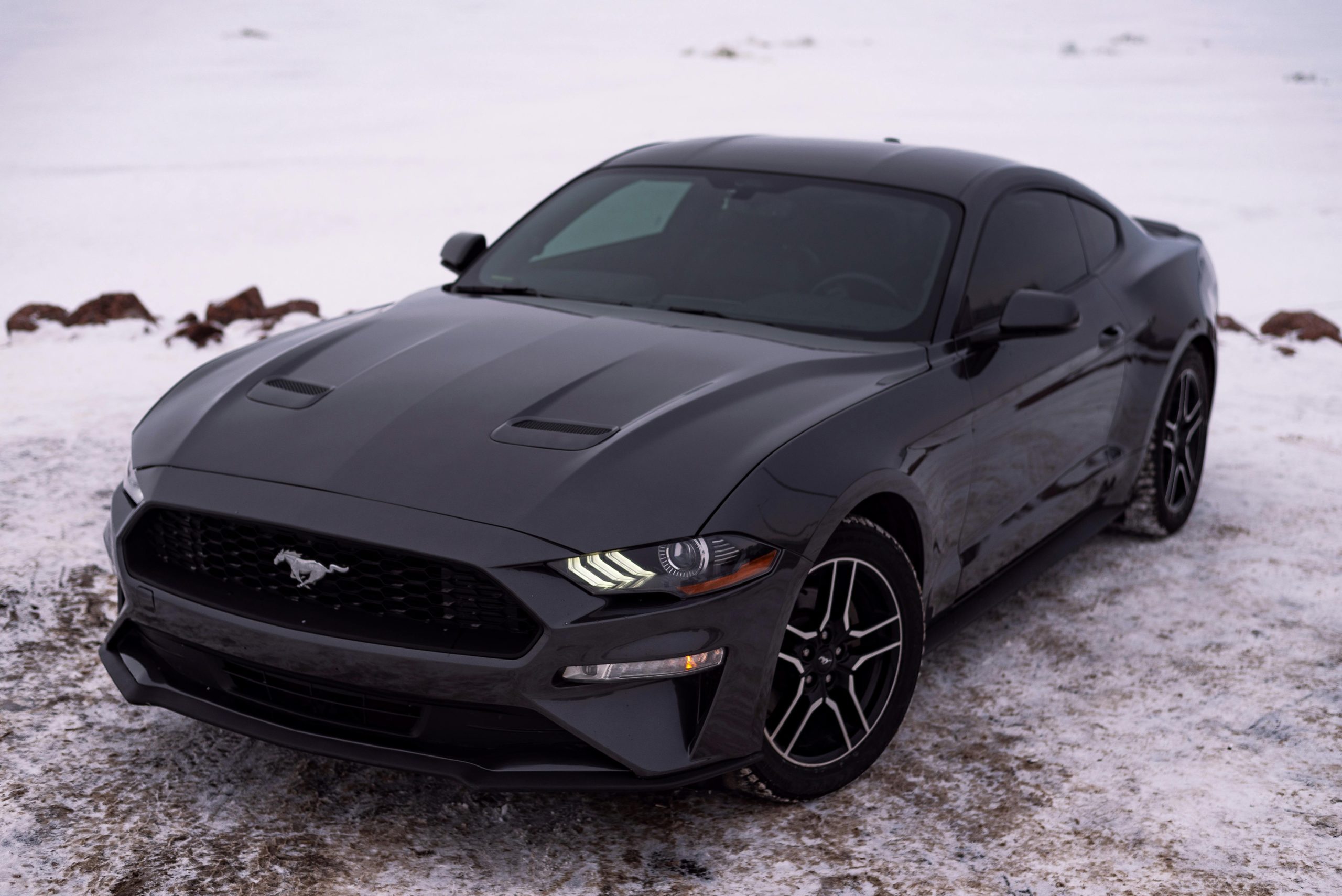
The reliability question matters when you’re investing in an iconic sports car like the Ford Mustang. At John Kennedy Ford Feasterville, we’ve helped countless Pennsylvania drivers navigate this decision with confidence. The Mustang delivers solid dependability backed by improving reliability trends across recent generations.
Modern Mustangs benefit from Ford’s engineering refinements and proven powertrains, with repair frequency remaining notably lower than that of other performance vehicles. The latest generations show meaningful improvements in build quality and long-term durability.
Ford Mustang Reliability: The Bottom Line
The Ford Mustang stands as a reliable sports car choice when you look at the complete picture. Sure, it ranks in the middle of the midsize car category, but repair frequency remains notably low. That matters more than ranking numbers for daily ownership. According to Consumer Reports owner surveys, Mustang drivers report terrific satisfaction across critical systems, including engines, transmissions, and electronics. Ford’s warranty coverage shows confidence, too, with five years or 60,000 miles of powertrain coverage and three years or 36,000 miles of bumper-to-bumper coverage.
We see Mustangs regularly surpassing 200,000 miles when owners follow maintenance schedules. The real story? This isn’t a finicky exotic requiring constant attention. It’s an American sports car engineered for both thrills and dependability. If you’re ready to experience what reliable performance looks like, browse our current Ford Mustang inventory to find the configuration that matches your driving style and needs.
What Reliability Ratings Tell Us About Mustangs
Reliability ratings pull together thousands of owner experiences into useful insights. They track repair frequency, problem severity, and overall satisfaction to create composite scores. For Mustangs, these ratings reveal a vehicle that performs better than its numerical ranking suggests. The disconnect between predicted reliability and actual owner satisfaction tells an interesting story.
While statistical models predict average performance, real-world owners consistently report positive experiences. This gap shows how well-maintained Mustangs exceed expectations. Newer model years reflect Ford’s commitment to addressing previous concerns through engineering improvements and quality control enhancements.
Consumer Reports and J.D. Power Data
Consumer Reports predicts average reliability for the 2026 Mustang, yet owner surveys paint a more optimistic picture. Actual Mustang owners rate their vehicles as terrific across every measured category: engine performance, transmission operation, in-car electronics, body quality, and electrical accessories. This disconnect between predictions and lived experience matters.
J.D. Power recognized the Mustang’s excellence in 2025, awarding it the highest rankings in both vehicle appeal and initial quality among sporty cars. These awards acknowledge what we observe at our service department: properly maintained Mustangs deliver consistent performance.
How Mustangs Compare to Other Sports Cars
The competitive landscape shifted dramatically when the Chevrolet Camaro and Dodge Challenger exited production, leaving the Mustang as America’s sole traditional muscle car. Against remaining competitors, the Mustang holds strong positions. Ford’s overall brand reliability ranking of 13th among manufacturers demonstrates corporate commitment to quality.
Here’s what’s impressive: the Mustang outperforms premium European sports cars like the BMW 4 Series and Mini Cooper in predicted reliability. This advantage becomes tangible when comparing ownership costs and maintenance requirements. European sports cars often demand specialized service and expensive parts. The Mustang benefits from widespread parts availability and a network of trained technicians, including our certified team here in Feasterville.
Mustang Reliability by Generation
Each Mustang generation brings distinct engineering approaches affecting long-term dependability. The sixth and seventh generations represent Ford’s modern era, incorporating advanced materials and technologies. Understanding generation-specific strengths helps buyers make smart decisions, whether shopping for new or pre-owned.
Post-redesign model years typically show improvement as manufacturers address early production issues. We’ve tracked these patterns through our service department, noting which years arrive for unexpected repairs versus routine maintenance.
Sixth Generation S550 (2015-2023)
The S550 generation marked a significant leap forward with independent rear suspension and refined interior appointments. Reliability varied across these nine model years, with post-redesign models from 2018 onward showing notable improvement. Early production years experienced some growing pains as Ford fine-tuned new systems.
The 2018 refresh brought key refinements that enhanced both performance and dependability. We recommend focusing on 2018-2023 model years when shopping for used S550 Mustangs. These later examples benefit from manufacturing improvements while offering excellent value. The powertrain options (both EcoBoost four-cylinder and V8 configurations) proved durable when properly maintained.
Seventh Generation S650 (2024-Present)
The current S650 generation launched strongly, with 2024 models earning some of Consumer Reports’ best-ever predicted reliability ratings for the Mustang. This achievement reflects lessons learned from previous generations and Ford’s investment in quality control. However, 2025 models received slightly lower ratings, and 2026 predictions settle at average reliability.
This fluctuation appears to be tied to ongoing refinements rather than to fundamental problems. The 2024 model year represents a sweet spot for buyers seeking cutting-edge Mustang performance with strong reliability credentials. Our certified pre-owned inventory often includes these recent models, offering warranty protection with proven dependability.
Common Ford Mustang Problems to Watch For
No vehicle is perfect, and the Mustang has known issues worth understanding before purchase. Awareness helps buyers make informed decisions and budget for maintenance appropriately. We’d rather discuss potential problems up front than surprise you later. Most issues affect specific model years or configurations, making targeted shopping strategies effective.
Engine and Transmission Concerns
Engine reliability generally rates well, though certain model years experienced specific issues. Some EcoBoost models faced turbocharger issues, while select V8 variants experienced timing-related problems. Oil consumption complaints appeared in specific production runs.
Transmission performance varies between manual and automatic configurations. The 10-speed automatic introduced in recent years occasionally exhibits learning-period quirks as it adapts to driving styles. Manual transmissions prove durable but require proper clutch maintenance.
Pre-purchase inspections by our certified technicians can identify potential engine or transmission concerns before they become expensive repairs. Service records matter tremendously. Mustangs maintained according to Ford’s schedule sidestep many reported problems.
Electrical and Body Quality Issues
Modern Mustangs feature sophisticated electronics that can occasionally pose challenges. Infotainment system glitches, dashboard display malfunctions, and connectivity issues are reported by owners. Most electrical issues are resolved through software updates rather than hardware replacement.
Body quality varies by production year, with some owners noting paint inconsistencies or fitment issues. These cosmetic concerns don’t affect mechanical reliability but matter for resale value and pride of ownership. Our service department stays current on all technical service bulletins and recall campaigns to keep your Mustang performing its best.
Real-World Longevity and Ownership Costs
Mustangs regularly exceed 200,000 miles when owners commit to preventive maintenance schedules. The $709 average annual repair cost from RepairPal compares favorably to other sports cars, which often demand significantly higher maintenance budgets. Insurance costs reflect the Mustang’s performance capabilities but remain reasonable compared to exotic sports cars.
Fuel economy varies dramatically between EcoBoost four-cylinder and V8 configurations, affecting long-term operating costs. The EcoBoost delivers surprisingly efficient daily driving without sacrificing too much performance. V8 owners accept higher fuel costs as the price of that unmistakable soundtrack.
Depreciation follows typical sports-car patterns, with steeper initial drops that level off after five years. Our certified pre-owned inventory offers sweet spots where depreciation has already occurred, but plenty of vehicle life remains. Ford’s five-year, 60,000-mile powertrain warranty transfers to subsequent owners, providing valuable protection for used Mustang buyers.
How to Find a Reliable Mustang
Smart shopping starts with identifying model years that demonstrate strong reliability records. The 2018-2023 S550 range offers excellent value with proven dependability. The 2024 S650 earned exceptional reliability predictions if you prefer the latest generation.
Request comprehensive service records showing adherence to Ford’s maintenance schedule. Look for single-owner vehicles with dealer service history rather than multiple owners with spotty documentation. Certified pre-owned Mustangs from our inventory undergo rigorous 172-point inspections, ensuring mechanical soundness and proper operation of all systems. We back CPO vehicles with extended warranty coverage for peace of mind.
Schedule inspections during daylight to properly assess body condition and paint quality. Test drives should include highway speeds, not just neighborhood cruising, to evaluate engine and transmission performance under load. Schedule a test drive to experience how proper maintenance translates to confident performance.
Is the Ford Mustang Right for Feasterville Drivers?
Year-Round Driving and Pennsylvania Weather
Pennsylvania roads demand vehicles that handle a range of conditions, from smooth highways to rough secondary roads. The Mustang’s refined suspension manages this variety better than previous generations. Winter driving requires appropriate tires and careful throttle management, given the rear-wheel-drive configuration. Many local owners keep their Mustangs as warm-weather vehicles, storing them during harsh winter months to preserve condition.
For daily year-round driving, the EcoBoost with all-season performance tires offers a practical compromise. Our service department understands the regional challenges facing Mustang owners. We recommend rust protection treatments for vehicles driven through Pennsylvania winters. Salt exposure accelerates corrosion if protective measures aren’t taken.
Choosing the Right Configuration
The Mustang delivers weekend excitement and weekday practicality when configured correctly. Coupe and convertible body styles serve different needs. Convertibles maximize summer enjoyment while coupes provide better year-round practicality.
The performance, style, and improved reliability make the Mustang compelling for Pennsylvania enthusiasts. We’ve served the Feasterville community since our founding as part of the John Kennedy Family of Dealerships in 1955. That experience taught us that transparency builds lasting relationships. The Mustang isn’t perfect, but it delivers dependable sports-car thrills when properly maintained and with realistic expectations.
Experience the Mustang at John Kennedy Ford, Feasterville
Visit us at 620 Bustleton Pike to discuss which Mustang configuration suits your driving needs. Our sales team can walk you through our current inventory, financing options, and maintenance programs designed to maximize your Mustang’s reliability. Contact us online or call us at 267-215-4267 to start your Mustang journey today.
Connect with us


- August 2026
- July 2026
- June 2026
- April 2026
- March 2026
- February 2026
- January 2026
- December 2025
- November 2025
- October 2025
- September 2025
- August 2025
- July 2025
- June 2025
- May 2025
- April 2025
- March 2025
- February 2025
- January 2025
- December 2024
- November 2024
- October 2024
- September 2024
- August 2024
- April 2024
- March 2024
- February 2024
Archives
- 0-60 Times
- 2026
- Feasterville-Trevose Ford Dealer
- Feasterville-Trevose Ford Service
- Feasterville-Trevose Used Cars
- Ford Bronco
- Ford Edge
- Ford Escape
- Ford Explorer
- Ford F-150
- Ford F-250
- Ford Lightning
- Ford Maverick
- Ford Mustang
- Ford Mustang Mach-E
- Ford Ranger
- Ford SUVs
- Ford Transit
- Ford Trucks
- How-to
- Interior
- Local
- Reliability
- Third-Row
- Towing
- Uncategorized